
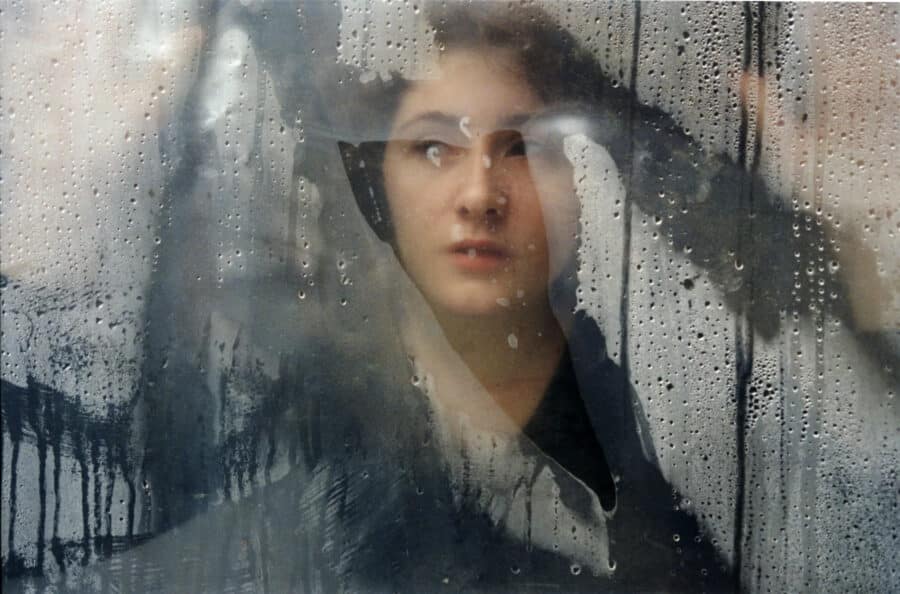
Depuis la mort de sa fille, les yeux de Zelina se perdent souvent dans le vague.
« Je suis déjà morte, dit-elle. Si seulement le temps pouvait venir plus vite ! ».
Groznyï, avril 2001
© Donation Stanley Greene, Ministère de la Culture (France), MPP, diff. NOOR
Exhibition
Stanley Greene
Photography as revolt
From 04 December 2026 to 09 May 2027
Jeu de Paume – Tours
Stanley Greene. Photography as Revolt is the first large-scale exhibition in France devoted to the American photographer who passed away in 2017. Presented at the Centre d’exposition du Château de Tours in 2026, then at the Jeu de Paume in Paris in 2027, it allows visitors to rediscover an exhibit spanning almost five decades of reportage carried out all around the world, from his first photographs of the San Francisco punk scene to his interest in environmental issues, as well as his long-term focus on conflicts between Russia and its former satellite states.
Born in Brooklyn to African American actors and advocates of the civil rights movement, Stanley Greene inherited from his family an uncompromising artistic vocation and a resolution to fight political injustice. Nevertheless, he broke away from his family, chasing these two convictions on his own terms—first by joining the San Francisco punk scene, and later by leading the nomadic life of a photojournalist. The world of nightlife, underground music, and drugs provided him with a formative space for artistic experimentation and radical dissent. His taste for risk and extremes led him to the front lines of a number of armed conflicts, notably in Chechnya, an “open wound” he steadfastly sought to bring to light.
Stanley Greene would never turn his back on revolt, denouncing domination and violence through his reportage, books, exhibitions, and films. Establishing himself as an iconic figure of socially engaged photography, he fashioned his own mythology to better serve the causes for which he had become a spokesperson. Indeed, he inhabited this romantic persona with such sincerity that it became difficult to separate the narrative from actual fact.
His autobiography, Black Passport, portrays his life as a film with plenty of dramatic twists and turns. Yet, he was above all, a journalist who was deeply committed to professional ethics and the necessity of producing reliable, precisely documented images, destined to be published in the press before they became episodes of his saga-like life. His vast body of photographic work bears witness to this quest for justice alongside marginalized and oppressed figures.