About Jeu de Paume
An art centre devoted to the image from the 19th, 20th, and 21st centuries
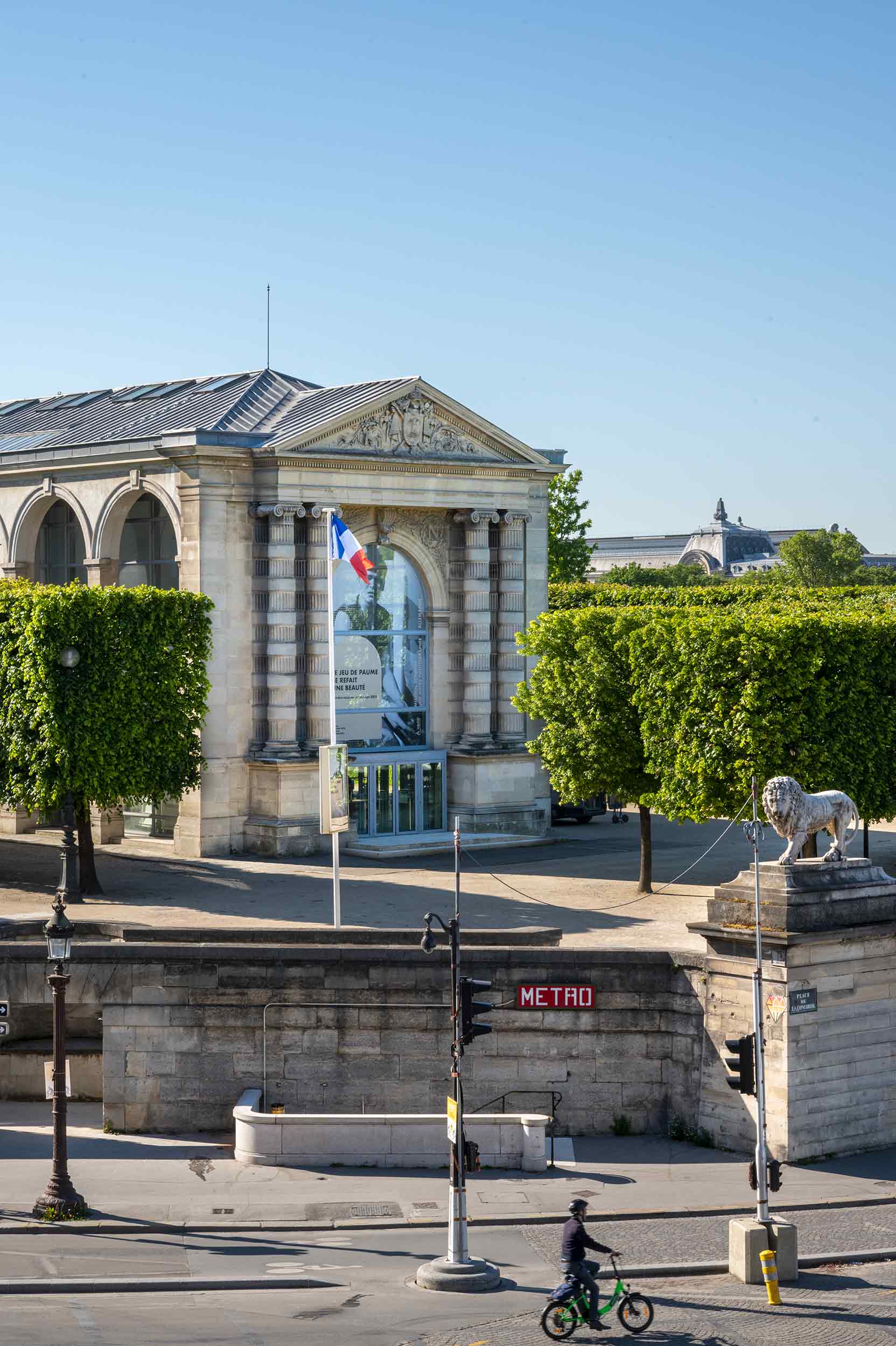
Tucked away in the Tuileries Gardens in the heart of Paris, the Jeu de Paume has emerged as one of the leading venues on the French and international art scene since 2004. An art centre devoted to the image—photographic, cinematographic, digital, and/or AI-generated—it is much more than just an exhibition space. It is also a hub for thought and experimentation, a space where contemporary creation engages with the history of visual forms, from the nineteenth century to the present day.
In an age when images have multiplied and invaded the public and private spheres, the Jeu de Paume has chosen to make these images an object of curiosity, analysis, and debate. Its ambition is twofold: firstly, to offer the public the conditions for a real encounter with works that could be deemed challenging, and secondly, to foster a critical reflection on the visual, cultural, and social issues of our day.
Exhibitions at the heart of our mission
The exhibitions programme is the beating heart of the Jeu de Paume. Resolutely contemporary and open to the diversity of artistic practices, it explores documentary and fine art photography, video, experimental film, digital imagery, and more recently, the new forms generated by artificial intelligence, from across the globe. Every season, the Jeu de Paume shines a spotlight on some of the major figures that have marked the history of the image, like Diane Arbus, Richard Avedon, Robert Capa, Dorothea Lange, Sally Mann, Vivian Maier, Martin Parr, and Cindy Sherman, while also leaving a place for lesser-known and more recent voices, including Julia Margaret Cameron, Thomas Demand, Victor Burgin, Marine Hugonnier, and Bertille Bak, amongst others.
Whether monographic or collective, thematic or transhistorical, the Jeu de Paume exhibitions all share a common goal: to position each work within its true context—historical, political, and aesthetic—while simultaneously grounding it in contemporary issues. Recognized as a pioneer in exploring the boundaries between art and technology, the Jeu de Paume organized one of the first major exhibitions dedicated to artificial intelligence and the visual arts in 2025, praised by the French and international press alike.
Festivals focusing on fledgling artists and new forms of images add to this dynamic and underline the Jeu de Paume’s vocation to uncover the talents of tomorrow and to pursue an interdisciplinary dialogue.
Cinema with a conscience: a space for unique works
Since 2024, the Jeu de Paume has housed a ninety-seat arthouse cinema, reflecting and responding to the public’s appetite for works merging arthouse, documentary, and contemporary fiction. The programme, with a focus on “Research and Discovery”, further highlights our firm commitment to independent cinema: debut features, artists’ films, and bridgeways and/or dialogues between cinema and contemporary art are all shown here. Demanding and diverse, encompassing fiction, documentaries, short films, and feature films, it showcases productions discovered on the festival circuit, offering them lasting visibility and an extended longevity, while at the same time enriching the possibilities offered by the Parisian cinematic landscape.
Screenings are regularly paired with meetings with industry professionals—directors, distributors, critics—in a variety of formats: previews, film clubs, debates, and discussions. Several partnerships have structured this dynamic. The Café de la Critique, in partnership with the Semaine de la critique (Critics’ Week) for example, brings together industry players to discuss contemporary issues in cinema. L’Europe et son cinéma, on the other hand, offers a historical, aesthetic, and political exploration of European cinema, whereas Lost in Frenchlation, promotes French cinema to an English-speaking audience. Finally, Format Court / Formats Longs, in partnership with the Format Court magazine and festival, looks at the career of filmmakers who have transitioned from short to full-length films.
The cinema programme at the Jeu de Paume is also committed to young audiences. This can be seen through L’Enfance de l’Art event in collaboration with the Parisian independent cinema network.
A cultural, social, and educational ecosystem
The influence of the Jeu de Paume can also be felt through a rich cultural ecosystem designed to reach the widest possible audience. Meetings, conferences, and study days regularly bring together artists, filmmakers, academics, and professionals to discuss some of the key issues raised by contemporary images. A digital platform offering educational and scholarly resources is accessible to all and prolongs the life of the various exhibitions and events online.
Mediation also plays a pivotal role in the Jeu de Paume’s mission. Activities are adapted for children, families, school groups, and people with disabilities with the aim of making this venue an open cultural space, attentive to social divisions and the inequalities that exist in terms of cultural access.
This social commitment is also reflected in the Jeu de Paume’s material choices. The venue boasts a sustainable scenography policy, organic cafe, and a temporary terrace in the Tuileries Gardens. All these actions make the Jeu de Paume a place in tune with the concerns of our time.
Heritage at the service of the future
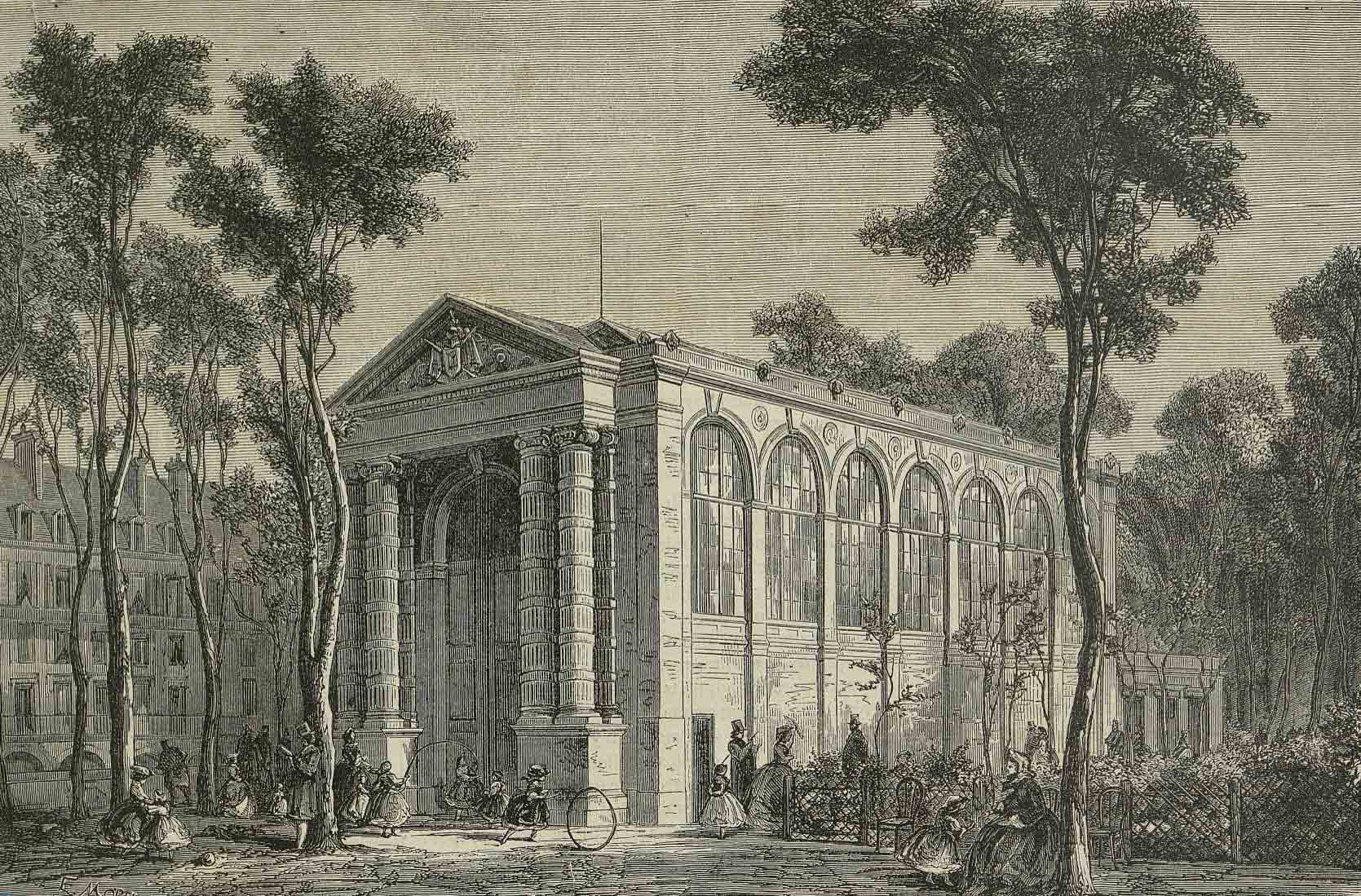
The history of the Jeu de Paume is intimately linked to the history of Paris. A former playing grounds under Napoléon III, it was transformed into an exhibition space at the start of the twentieth century and played a decisive role in the Second World War thanks to the actions of Rose Valland, a hero of the French Resistance. The terraces of the Jeu de Paume have been named in her honour, in recognition of her efforts to save artworks from looting by the Germans. This heritage is more than just about commemoration however, it permeates the consciousness of the space, but also its way of inhabiting history and cultivating cultural responsibility.
With the support of the French Culture Ministry and leading patrons like CHANEL, Jaeger-LeCoultre, Fondation Neuflize OBC, Fondation Louis Roederer, Fondation Swiss Life, and Les Amis du Jeu de Paume, the Jeu de Paume is a singular balance of independent thought and an institutional framework. In an era where images shape identities, opinions, and collective imagination, the Jeu de Paume is more than ever an essential space that allows us to see differently, but also to think and understand the world through the representations it offers.
Our structure
Jeu de Paume is an association under the law of 1901, subsidized by the French Ministry of Culture and supported by Manufacture Jaeger-LeCoultre, a privileged patron.
It is chaired by Alain Dominique Perrin and directed by Quentin Bajac.